
錬勇拳 RENYUKEN
錬 (REN) – to forge, refine, or temper. Disciplined training or forging the body and mind through repetition.
勇 (YU) – courage, bravery, valor. The spirit to act in the face of difficulty.
拳 (KEN) – fist, but more broadly used to mean a martial art or fighting system
At Renyuken it isn’t just physical - it’s about refining character through training. Building toughness, discipline, and confidence through controlled adversity on the mat.
Slogan: Forge the body. Temper the spirit.
Our Philosophy
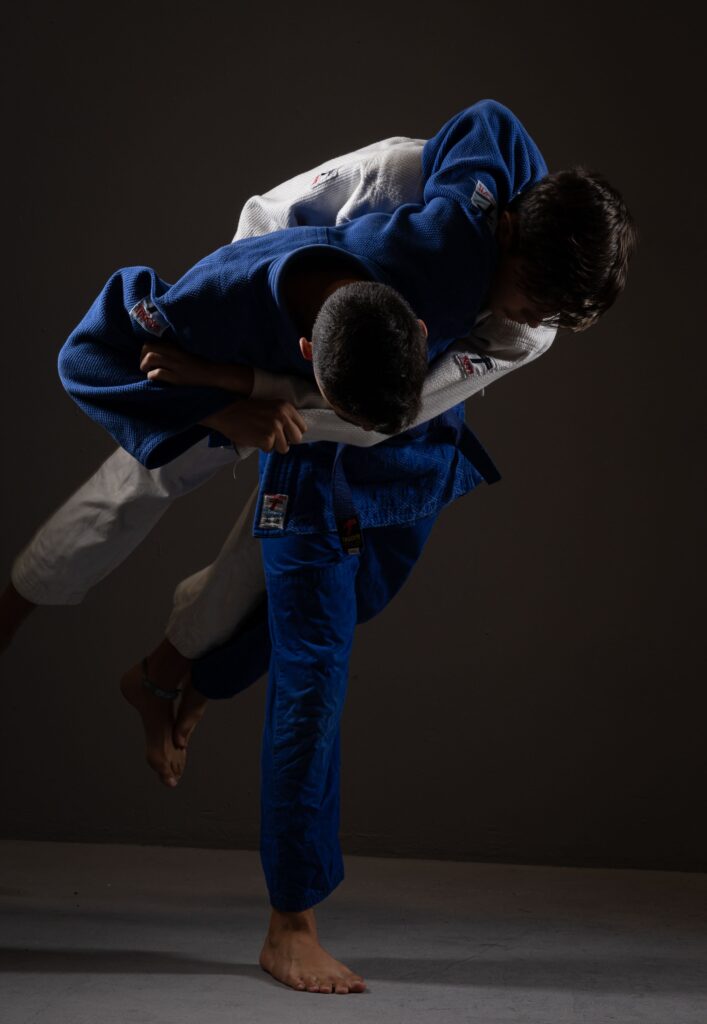
At Renyuken Dojo the body is forged through the physical discipline of training, and the spirit is tempered through the challenges of learning something difficult.
Judo, meaning “The Gentle Way,” was founded by Jigoro Kano in 1882 at the Kodokan in Tokyo, Japan.
Its purpose is not just physical training, but character development.
At Renyuken Dojo, we emphasize:
- Control before power
- balance before force
- Character before victory
We train students to stay composed under pressure – a skill that transfers into school, work, and life.
JUDO. BEYOND THE THROW.
DOJO ETIQUETTE
Bowing
Bow when entering and exiting the training area (dojo), and bow to your partner before and after every drill or match. This is a sign of respect and gratitude.
Uniform (Gi)
Only traditional white judo gi are permitted on the mat. No colored or patterned gi. Gi must be clean, laundered, and in good repair before stepping onto the mat.
Uniform (No-Gi)
Rash guard and grappling shorts or spats – no zippers. Clothing should be snug and free of anything that could catch a finger or toe.
Hygiene
Fingernails and toenails must be trimmed short. No jewelry, watches, or piercings during training. Feet should be clean before stepping on the mat.
Punctuality
Arrive a few minutes before class to warm up and line up on time. If arriving late, wait at the edge of the mat and bow in only when acknowledged by the instructor.
Rank & Belt Order
Line up by rank at the start and end of class. Higher-ranked students are expected to help guide and support lower-ranked students.
On the Mat
Train with control — the goal of live practice (randori) is skill development for both partners, not just winning the exchange.
Safety
Tap early, tap often. Stop immediately when a partner taps or verbally submits. Report any injuries to the instructor right away.
Outside the Mat
Keep the training space clean — help fold mats, pick up gear, and leave the dojo as you found it.